

Mindfulness For ADHD: Evidence-Based Exercises And Tools
Your brain races from thought to thought. You start a task only to abandon it moments later. Sitting still feels impossible, and the standard advice to "just meditate" seems designed for someone else entirely. If you have ADHD, traditional mindfulness practices can feel like adding another item to an already overwhelming list of things you struggle to do.
Research shows mindfulness can significantly reduce ADHD symptoms like impulsivity, emotional reactivity, and scattered attention. But here's what makes the difference: you need techniques adapted for how your brain actually works. The breath-focused exercises that help neurotypical people often frustrate ADHD minds that crave movement and variety.
This guide walks you through evidence-based mindfulness exercises specifically designed for ADHD. You'll discover why mindfulness helps manage symptoms, learn practical techniques you can start using today, and find movement-based alternatives when sitting still isn't an option. We'll also share apps, videos, and other tools that make consistent practice easier. By the end, you'll have a personalized approach that fits your needs instead of fighting against them.
Why mindfulness helps with ADHD
Your ADHD brain struggles with executive functions, the mental processes that control attention, impulses, and emotional reactions. Mindfulness trains these exact skills by strengthening neural pathways in your prefrontal cortex. When you practice bringing your attention back to the present moment repeatedly, you're actually building brain circuits that help you pause before acting and refocus when distracted.
How mindfulness changes your brain
Studies show that regular mindfulness practice increases grey matter density in brain regions responsible for attention control and emotional regulation. Your anterior cingulate cortex, which helps you monitor conflicts and choose responses instead of reacting automatically, becomes more active and connected to other brain areas. This physical change in your brain structure explains why mindfulness for ADHD produces lasting improvements rather than temporary relief.
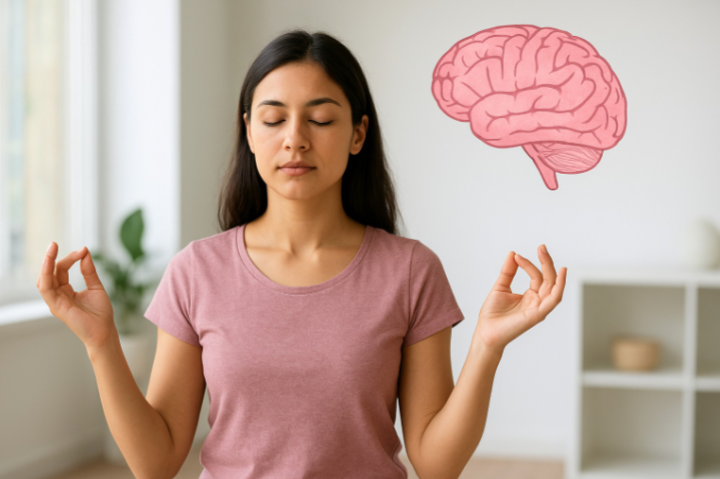
Research demonstrates that mindfulness meditation can reduce ADHD symptoms by 30-50% when practised consistently over eight weeks.
The specific symptoms it targets
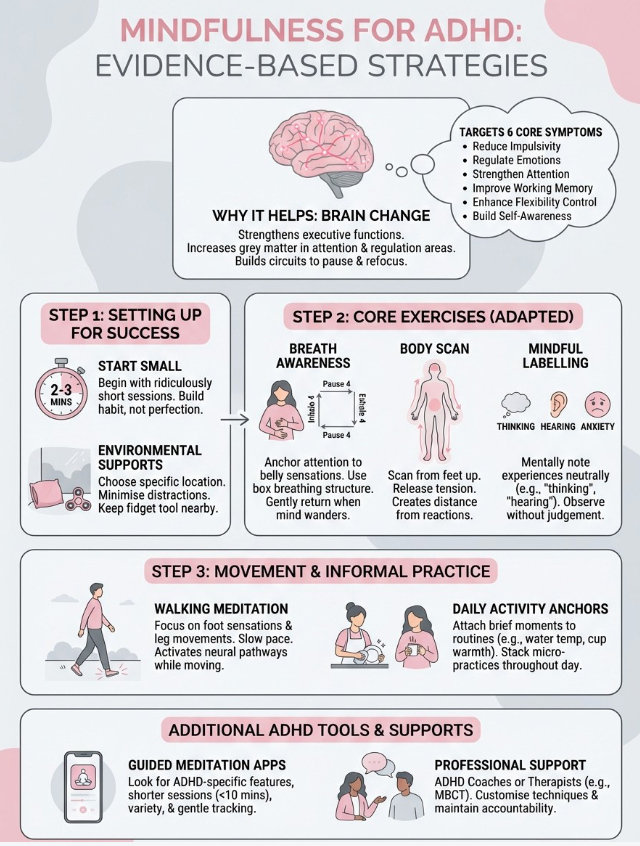
Mindfulness directly addresses six core ADHD challenges. It helps you reduce impulsivity by creating space between stimulus and response. Your ability to regulate emotions improves as you learn to observe feelings without being overwhelmed by them. Attention and focus strengthen through repeated practice of noticing when your mind wanders and gently redirecting it. Working memory gets better because mindfulness reduces the mental clutter competing for your cognitive resources. The practice also improves flexibility control, helping you transition between tasks more smoothly, and builds self-awareness so you recognize when you're becoming dysregulated before it escalates.
Step 1. Set yourself up for success
Your mindfulness practice needs to work with your ADHD brain, not against it. Traditional meditation advice tells you to sit for 20 minutes daily, but this approach sets most people with ADHD up for failure. Instead, you need realistic starting points and practical adjustments that accommodate your attention span and energy levels. The goal is building a sustainable habit, not achieving perfection.
Start with two minutes, not twenty
Begin with ridiculously short sessions of just two to three minutes. Your brain needs to experience success before you can build duration. Set a timer on your phone and commit only to that brief window. When two minutes feels manageable for three consecutive days, add one more minute. This gradual approach prevents the overwhelm that kills motivation. Many people with ADHD find they naturally want to extend sessions once they experience the calming effects, but forcing longer periods too soon creates resistance.
Starting small and building gradually leads to better long-term consistency than attempting ambitious goals that trigger avoidance.
Create environmental supports
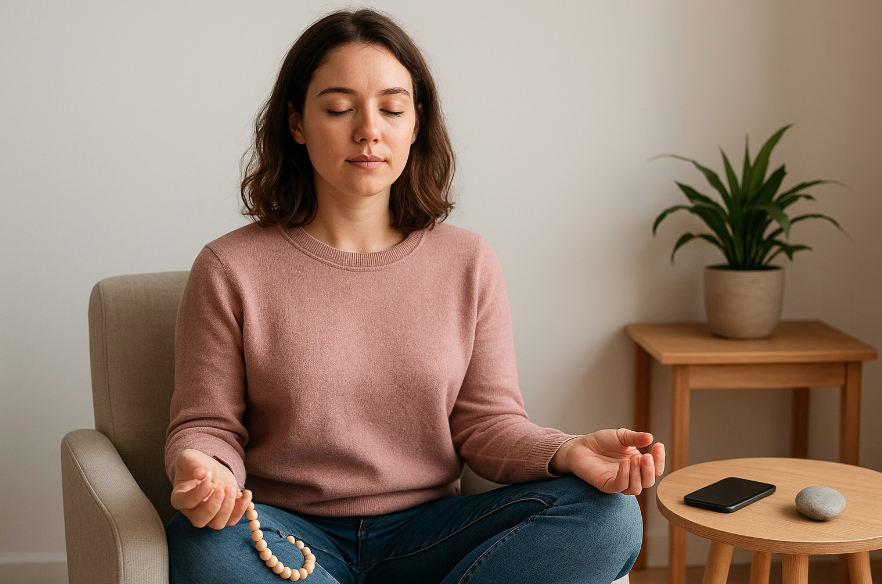
Choose a specific location where you'll practise each day, whether it's a corner of your bedroom or a favourite chair. Your brain forms stronger habits when anchored to physical cues. Remove distractions by putting your phone on aeroplane mode and closing your laptop. Keep a fidget tool nearby like worry beads or a smooth stone, as ADHD minds often focus better with subtle tactile input. Schedule your practice for when your medication is active if you take stimulants, or experiment with practising at medication-free times if you find your mind settles more easily then.
Step 2. Learn core mindfulness exercises
These three techniques form the foundation of mindfulness for ADHD. Each exercise trains your attention differently, giving you multiple tools to match your current state. You'll notice some. work better on certain days depending on your energy levels and medication timing. Practice all three to discover which resonates most, then focus your regular sessions on that technique while occasionally rotating through the others.
Breath awareness technique
This exercise anchors your wandering attention to physical sensations. Sit comfortably and close your eyes if that feels right, or keep them open with a soft gaze downward. Place one hand on your belly and feel it rise with each inhale and fall with each exhale. Count silently as you breathe: inhale for four counts, pause for four, exhale for four, pause for four. This box breathing pattern gives your ADHD mind a structure to follow.

Your attention will drift within seconds. When you notice you're thinking about dinner or tomorrow's meeting, simply acknowledge the thought without judgement and return focus to your breath. The act of noticing and returning is the practice itself, not maintaining unbroken concentration. Try this pattern for your two to three minute session:
1. Take three deep breaths to settle in
2. Begin box breathing (4-4-4-4 count)
3. Notice when your mind wanders (it will)
4. Gently redirect attention to belly sensations
5. Repeat steps 3-4 until timer sounds
Body scan practice
Body scanning helps you recognize physical tension before it triggers emotional dysregulation or impulsive reactions. Start at your feet and slowly move your attention upward through your body. Notice sensations in your toes, whether they feel warm or cold, tense or relaxed. Move to your ankles, then calves, knees, thighs, continuing through each body part until you reach the top of your head.
Physical awareness creates distance between your sensations and your reactions, giving you crucial seconds to choose your response.
Spend roughly 15 to 20 seconds on each major body area. When tension appears in your jaw or shoulders, breathe into that spot and imagine releasing the tightness on your exhale. This practice works particularly well when you're feeling physically restless or notice stress building in your body.
Mindful labelling
Label your experiences as they arise without getting caught in them. When a thought appears, mentally note "thinking." When you hear a sound, note "hearing." If you feel anxious, note "anxiety." This technique creates psychological distance from your internal experiences, helping you observe rather than react. Use simple, neutral labels that describe what's happening without adding story or judgement to the experience.
Step 3. Use movement and informal practice
Sitting still might never feel natural for your ADHD brain, and that's perfectly acceptable. Movement-based mindfulness and informal practices woven into daily activities often work better than formal meditation sessions. These approaches let you train attention while doing things that feel less restrictive. Your restless energy becomes an asset rather than an obstacle when you choose techniques that incorporate physical activity.
Walking meditation
Take your mindfulness practice outside where movement helps rather than hinders focus. Walk at a slower pace than usual and notice the physical sensations in your feet as they touch the ground. Feel your heel strike, your weight roll forward, your toes push off. Pay attention to your leg muscles contracting and releasing, the swing of your arms, the air moving past your skin. When your mind wanders to planning or worrying, bring your attention back to these walking sensations.
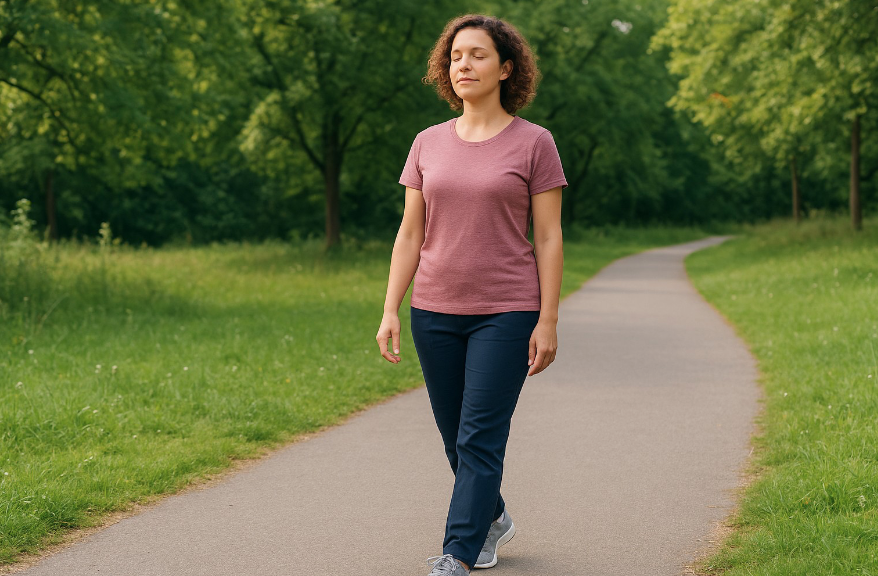
Movement meditation activates the same neural pathways as seated practice while accommodating the ADHD need for physical engagement.
Try this five-minute walking meditation format:
1. Choose a short path (10 to 15 metres)
2. Walk to one end noticing foot sensations
3. Pause and take three breaths
4. Turn and walk back, focusing on leg movements
5. Repeat for your practice duration
Daily activity anchors
Attach brief mindfulness moments to activities you already do every day. While washing dishes, focus completely on the water temperature, the soap's texture, the sound of plates clinking. During your morning shower, notice the water hitting your skin instead of rehearsing your schedule. When drinking tea or coffee, spend 30 seconds observing the cup's warmth in your hands, the steam rising, the first sip's flavour. These micro-practices build mindfulness for ADHD into your routine without requiring extra time or formal sessions. Stack three to five of these daily anchors throughout your day for cumulative benefits that match longer seated practices.
Additional ADHD friendly tools and supports
Technology and professional support can bridge the gap between knowing mindfulness techniques and maintaining consistent practice. Your ADHD brain benefits from external accountability and structured guidance that apps, videos, and coaches provide. These tools remove barriers by offering reminders, tracking progress, and adapting exercises to your changing needs.
Guided meditation apps
Download apps designed with ADHD-specific features like shorter session options and engaging variety. Headspace offers dedicated ADHD content with sessions starting at three minutes, while Insight Timer provides thousands of free guided practices sorted by length and focus area. Look for apps that send customizable reminders at times when you're most likely to follow through, and choose ones that track streaks without creating pressure that triggers avoidance.
Key features to prioritize:
Sessions under 10 minutes
Variety of techniques and teachers
Offline listening capability
Progress tracking without judgement
Free trials before committing
Professional support
Consider working with an ADHD coach or therapist trained in mindfulness-based interventions if self-guided practice feels overwhelming. These professionals help you troubleshoot obstacles, customize techniques for your specific symptoms, and maintain accountability. Therapy approaches like Mindfulness-Based Cognitive Therapy (MBCT) combine mindfulness for ADHD with practical strategies for emotional regulation and executive function challenges.
Professional guidance accelerates your progress by addressing individual barriers and adapting practices to match your neurological needs.
Schedule an initial consultation to discuss how mindfulness can integrate with your existing ADHD treatment plan, whether that includes medication, therapy, or other supports.
Bringing it all together
You now have evidence-based techniques for building a mindfulness practice that accommodates your ADHD brain. Start with just two minutes of breath awareness, body scanning, or mindful labelling. Add walking meditation or daily activity anchors when sitting still feels impossible. Use apps and professional support to maintain consistent practice through the inevitable obstacles.
Mindfulness for ADHD works differently than standard meditation advice suggests. Your restless mind and need for variety become strengths when you choose movement-based practices and rotate between techniques. Progress happens through regular brief sessions, not perfect execution. Each time you notice your attention wandering and bring it back, you strengthen the neural pathways that help manage symptoms.
If you need additional support integrating mindfulness into your ADHD treatment plan, professional therapy can help you develop personalized strategies that address your specific challenges. A therapist experienced with ADHD can guide you through obstacles and adapt these techniques to fit your lifestyle.
Interested in Booking Therapy with Morgan?
Related Blog Posts